Musty air. Suspicious stain. Quiet moisture along the wall—small signals that can snowball after the next rainfall or thaw. Here is what Canadian homeowners should notice before guesswork takes over.
A finished basement can feel welcoming while small moisture clues still linger.
IMAGE 01 / HEROWarm Canadian finished basement with subtle moisture warning sign16:9 · min 1600×900 px · natural light, lived-in, premium editorial toneFraming: compose wide room scene in the middle third; top/bottom may crop slightly.
The Small Things You Ignore
It starts with something you almost ignore.
You walk downstairs with a laundry basket and catch a musty smell that was not there last week. Maybe a baseboard looks darker or paint bubbles near the floor. If your Canadian home has a basement, the thought is familiar: probably nothing. And sometimes, it is.
But basements have a quiet way of reporting trouble. When the same clue keeps returning after rain, thaw, or humid weather, it deserves more than a shrug.
Small stain. Big question. Better now than after the next downpour.
Out of Sight. Not Always Out of Trouble.
Moisture does not need a dramatic entrance.
Your basement can look mostly normal while materials absorb dampness, odours settle into stored items, or one wall reacts to pressure outside. That uncertainty can make a family room feel less comfortable and an unfinished space harder to trust.
Not every mark points to a serious issue. Still, persistent moisture can affect trim, flooring, drywall, insulation, and belongings. It can also signal that the problem deserves a closer professional look.
Small stain. Big question.
Odd smell. Worth noticing.
Damp corner. Track when it appears.
The Numbers Behind the Water
Canadian basements live with real water pressure.
Flooding is described by the Government of Canada as the country's most common and costly natural hazard. Its overland flood insurance guidance, dated 2026-03-23, says the average cost to repair a flooded basement is over $40,000.
That does not mean your stain is a flood waiting to happen. It means water deserves respect—especially below grade, where pressure and patience both matter.
$40K+Average repair cost for a flooded basement, according to Government of Canada overland flood insurance guidance dated 2026-03-23.
30–50%Health Canada guidance recommends maintaining indoor relative humidity between 30% and 50% to help control moisture and mould.
These figures are context, not a diagnosis. They simply show why repeated basement moisture clues are worth taking seriously in a Canadian home.
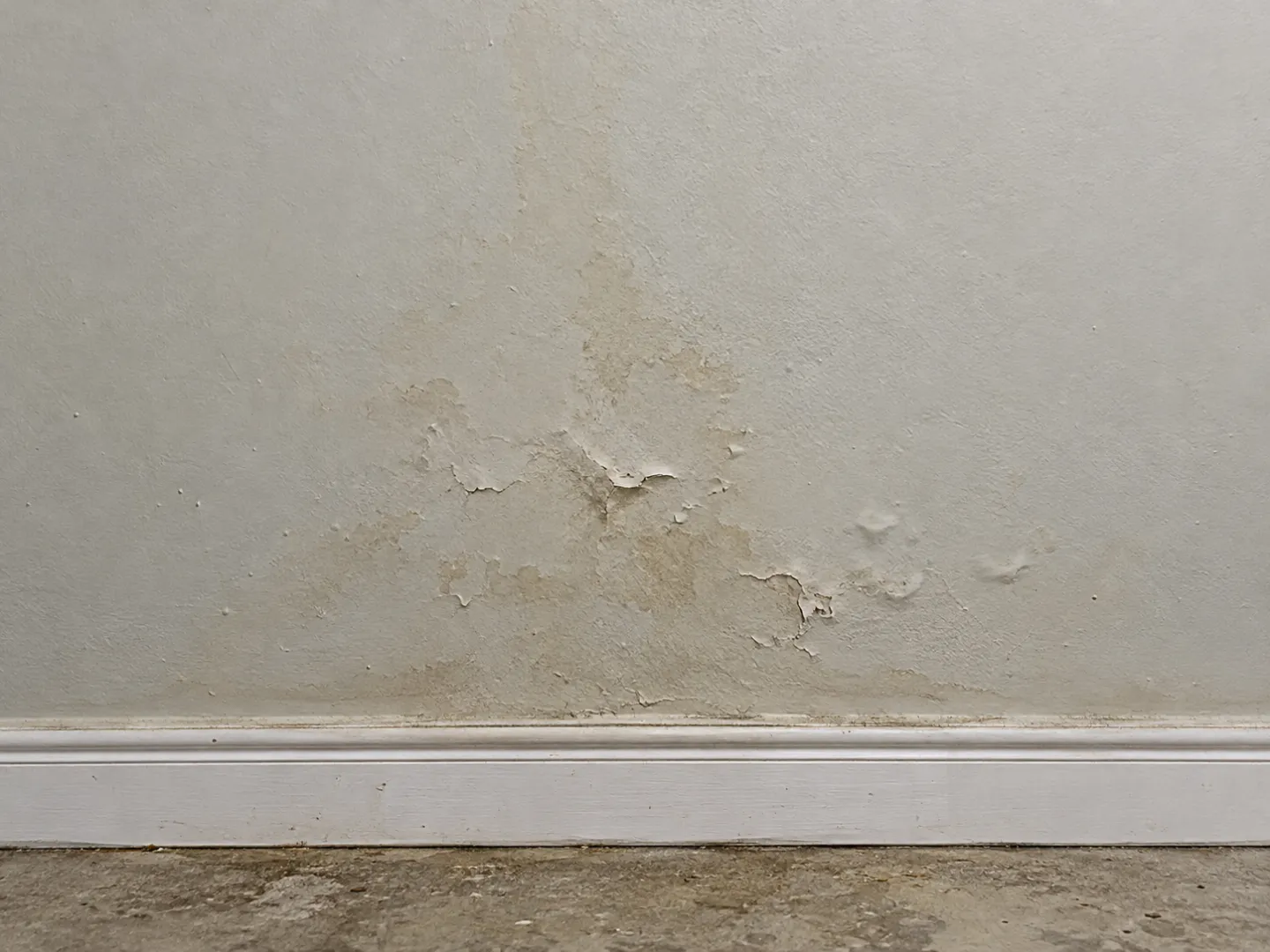
Stains and bubbling paint often appear long before standing water shows up.
IMAGE 02 / WARNING SIGNSClose-up of staining or bubbling paint4:3 · min 1200×900 px · sharp detail, neutral basement wall textureFraming: keep the stain or bubble detail centered; equal margin on all sides.
Your Basement Is Trying to Tell You Something
Look for patterns, not panic.
Persistent musty odoursAir that smells damp even after ventilation can point to moisture that keeps returning.
Water stains or peeling paintWatch for marks that darken after rain or collect near the floor line.
White powdery depositsEfflorescence on masonry can appear when water moves through mineral surfaces.
Dampness after heavy rainfallTiming matters. Note what changed outside before the clue appeared inside.
Cracks worth a closer lookA crack is not a diagnosis, but active moisture around one deserves attention.
The Basement Reality Check
Not Sure What's Going On Downstairs?
Musty smell? Mystery stain? Rain-day dampness? Four quick questions—no contact details—to see what deserves a closer look.
60-Second Basement Reality Check
4 questions · About 60 seconds · No contact details needed
Question 1 of 4
What have you noticed in your basement?
Your Guidance
This quick check is educational only and does not diagnose your home's condition.
The practical first step is to separate what you notice, when it appears, and what changed around the house.
What you noticeWhat it might meanWhat to check next
Window condensationIndoor humidity may be high.Measure humidity and improve ventilation.
Musty odourMoisture may be lingering.Track whether it returns after rain.
Rainfall-related stainExterior water may be reaching the wall.Check downspouts, grading, and timing.
Visible water entryThere may be an active water path.Document the location and request a closer look.
The goal is not to solve the basement from a checklist—it is to turn clue, timing, and context into a calmer conversation downstairs.
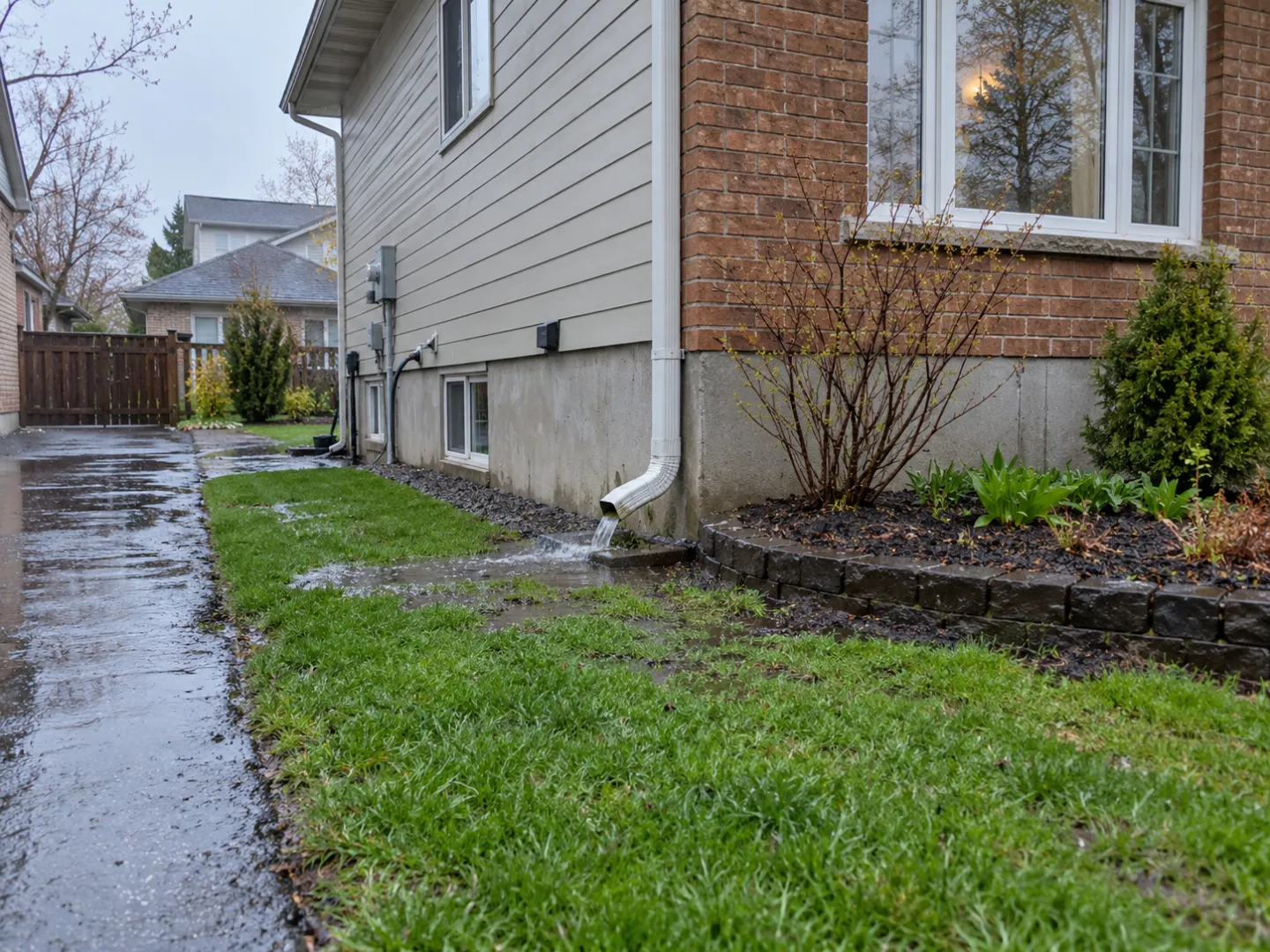
Rain and meltwater follow grading, downspouts, and paths toward the foundation.
IMAGE 03 / EXTERIORCanadian home foundation and drainage after rainfall4:3 · min 1200×900 px · visible grading, downspout, damp landscapeFraming: place foundation line and downspout in the center band; sky/ground may trim.
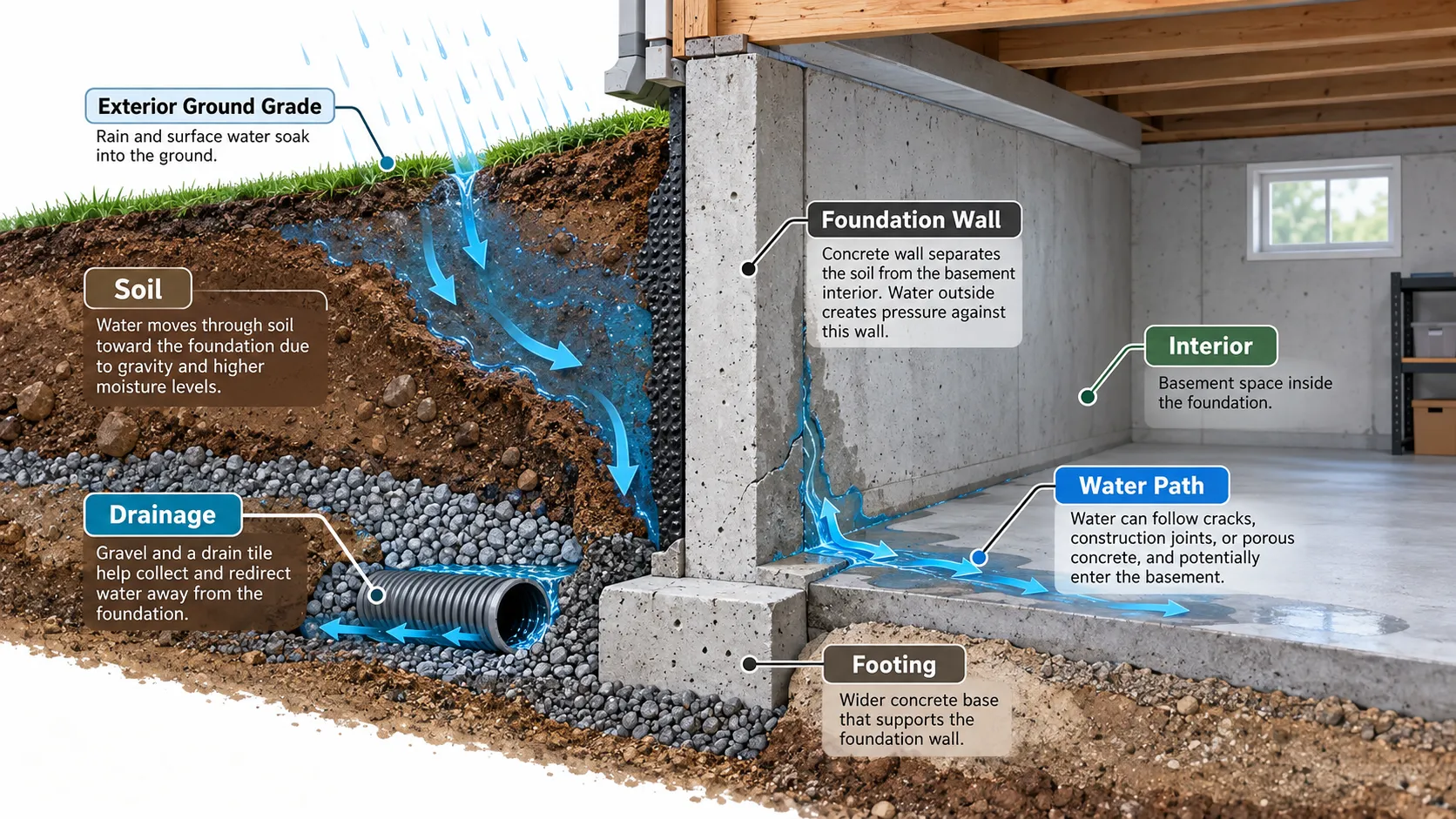
Below grade, soil moisture and drainage details can push water toward basement walls.
IMAGE 05 / EDUCATIONALBasement foundation and water-intrusion cross-section16:9 · min 1600×900 px · clean explainer illustration, labelled layersFraming: keep full diagram centered; labels should sit inside the safe middle 80%.
What's Happening Outside Matters Downstairs
Water follows the path your property gives it.
Heavy rainfall, snowmelt, downspout discharge, ground grading, and foundation drainage can all influence how much water gathers near your basement walls. None of those details automatically means your basement will flood.
They do give you better questions. Does water pool near the house? Do downspouts empty too close to the foundation? Does dampness appear after storms or during thaw? Those observations help a professional understand the pattern faster.
In Canada, patterns shift quickly. A dry February basement may tell a different story during April thaw or an August downpour. If the clue keeps returning, ask a better question—not a louder worry.
Tell us how to reach you, and a basement waterproofing professional may contact you to discuss your concerns. If you have noticed a pattern after rain, thaw, or humid stretches, documenting it now can make the next conversation clearer.
Less guesswork. More ground truth.
Noticing a repeating clue calmly is often the first useful step downstairs.
IMAGE 04 / HUMAN INTERESTHomeowner inspecting a basement concern4:3 · min 1200×900 px · realistic, calm, homeowner-focusedFraming: keep faces and hands in the upper-middle; floor line can crop at bottom.
Request received
Thank you! Your request has been received. A basement waterproofing professional may contact you shortly to discuss your concerns.
Cookie Preferences
Choose whether optional analytics and marketing scripts may be used on this page.